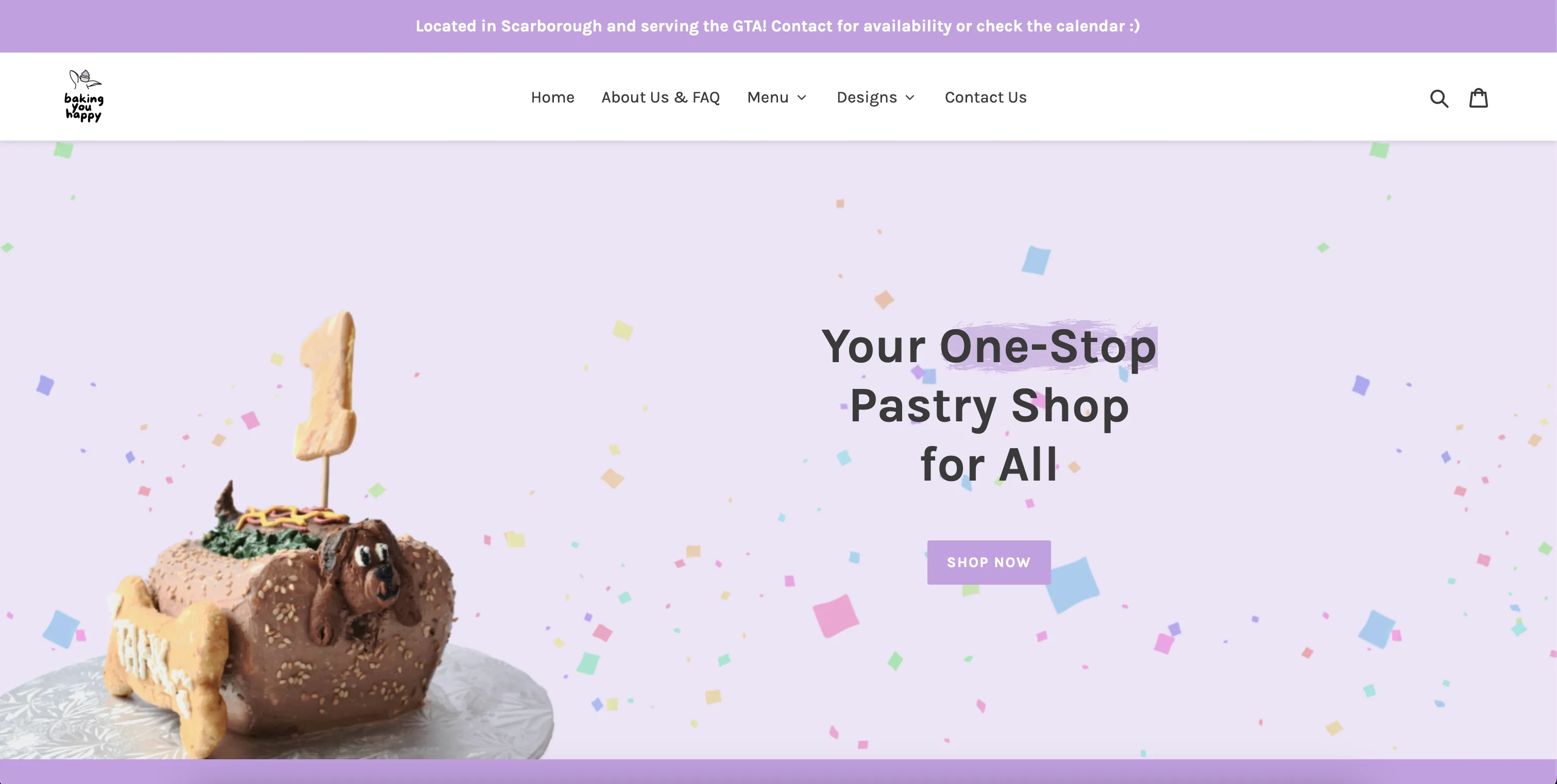
BYH Branding & Website
Problem: A friend’s small business was in need of a holistic branding system for marketing, including a new logo and an e-commerce website for a bakery.
Solution: A branding style guide including a new logo system and a defined color palette and font selections to be applied to website and social media material designs.
Branding
My friend’s vision for Baking You Happy began with her, at the time, new pet bunny, Lily. Her original logo consisted of a brand mark of a bunny’s head with one ear pointing down to emulate the real Lily’s unique feature, with the brand’s name in a half circle. In practice, the logo was not terribly responsive or versatile for various applications such as packaging and marketing materials. In re-designing a new logo, I wanted to focus on balance and versatility while retaining the cutesy, feminine tone of the original logo.
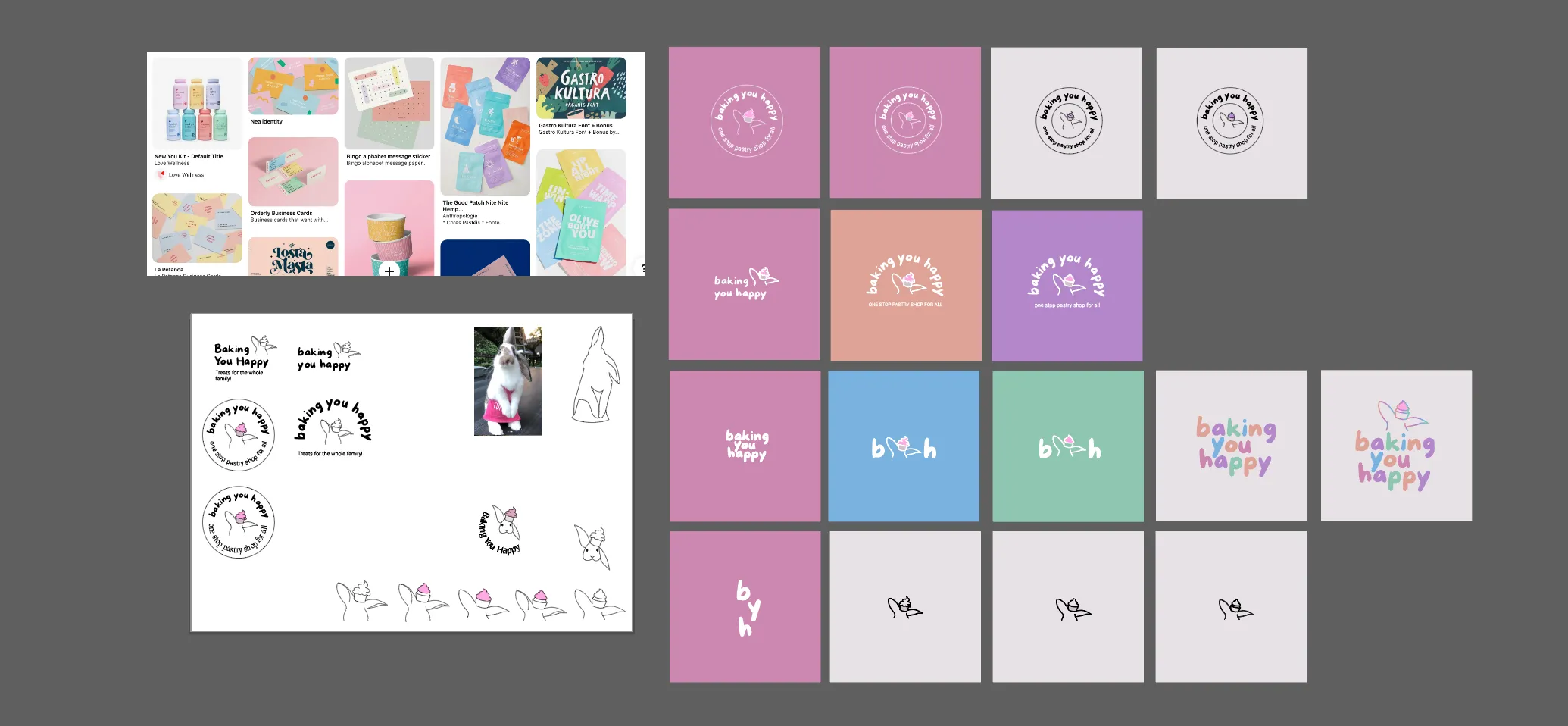
I began by collecting images on Pinterest that I believed best represented the overall vision of Sara’s bakery: colourful, cute, and joyful. I ended up with a lot of pastel pinks, blues, and purples, with bubbly, display fonts. From there, I used Adobe Illustrator to test out different brand marks based on reference photos of the real life Lily. I wanted to capture her appearance and keep the cupcake from the original logo with minimal lines in order to retain clarity at any resolution. Additionally, I wanted to introduce balance despite her lopsided ear by keeping the base of the logo flat.
Once I had the brand mark and a font that I liked (aptly called “More Sugar”), I started to design various logo options with different colourways within the colour palette we had decided on. I wanted to test out the brand mark and font with different “types” of logo — primary, secondary, submark — to ensure the adaptability of the iconography.
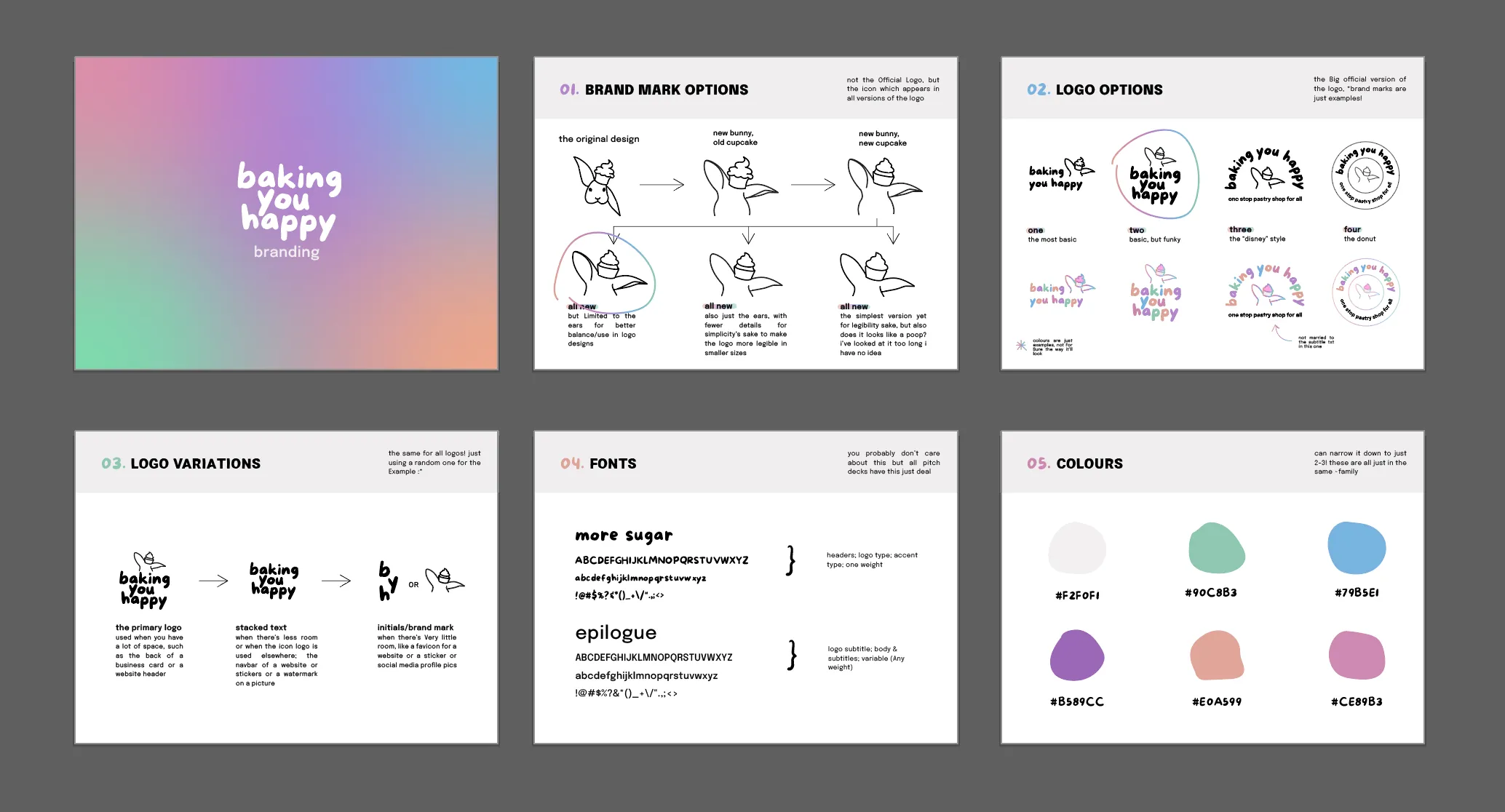
From there, I created a branding document chronicling my design process with several options for my friend to choose from (her choices circled) as well as the fonts and colours we had already discussed.
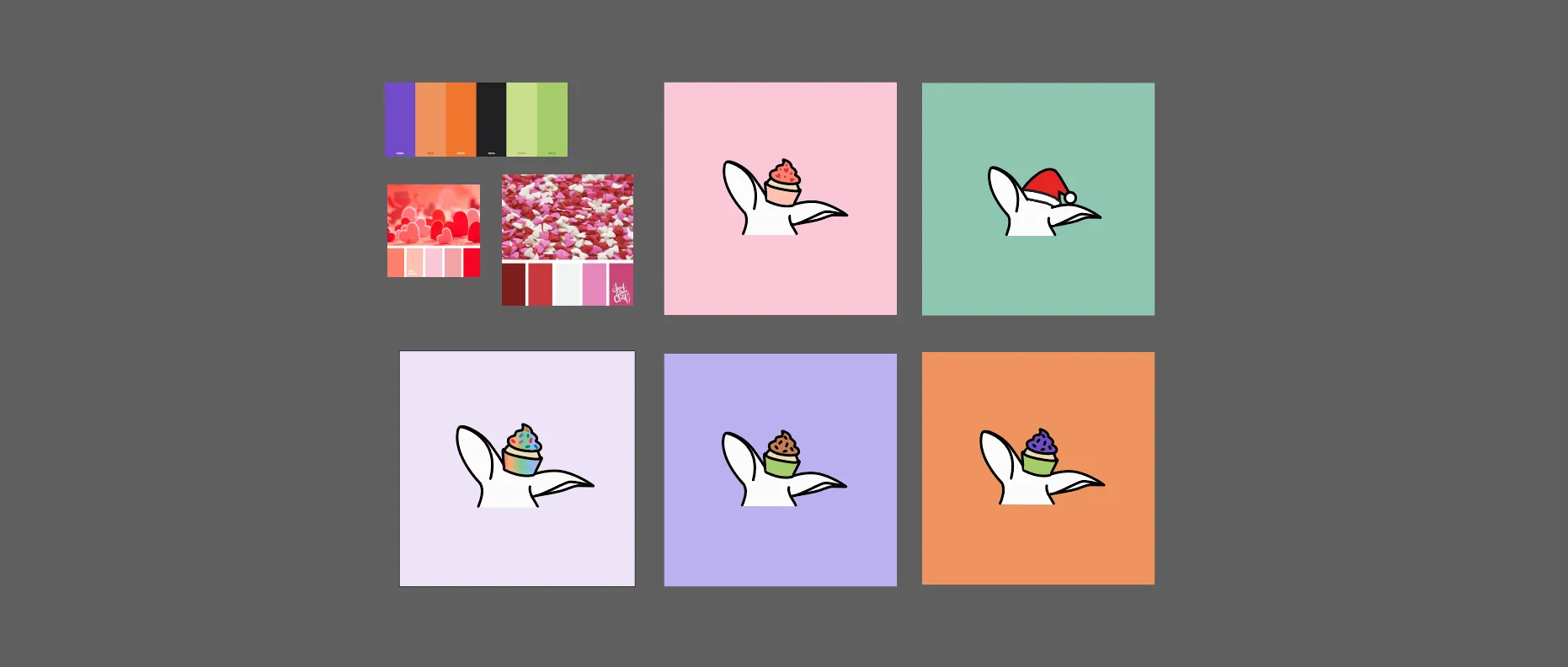
In the time since creating and finalizing the logo with my friend, I have also created “holiday” versions of the logo, such as emphasizing a pink colour scheme for Valentine’s Day, applying an orange-green-purple colour scheme for Halloween, and replacing the cupcake with a Santa hat for Christmas.
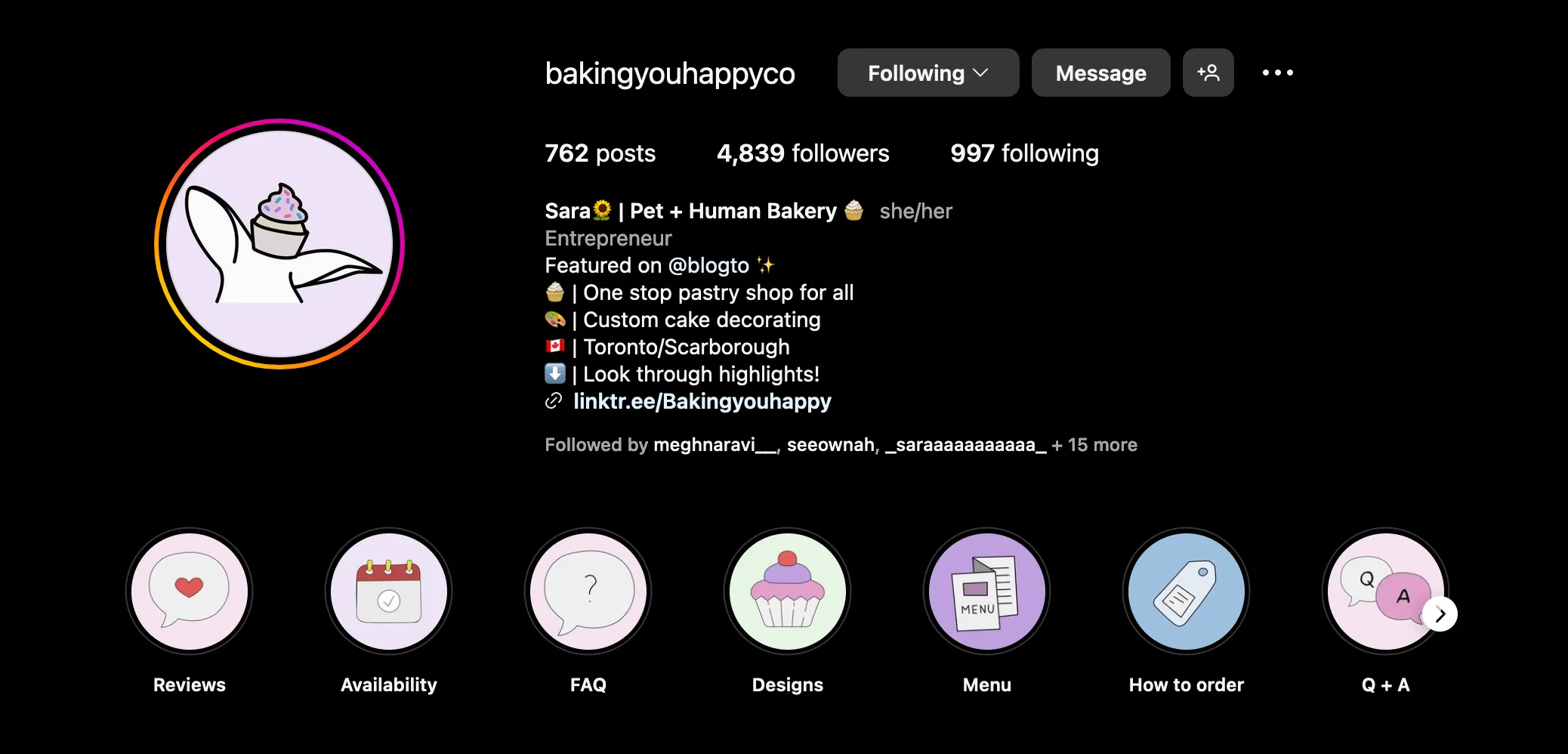
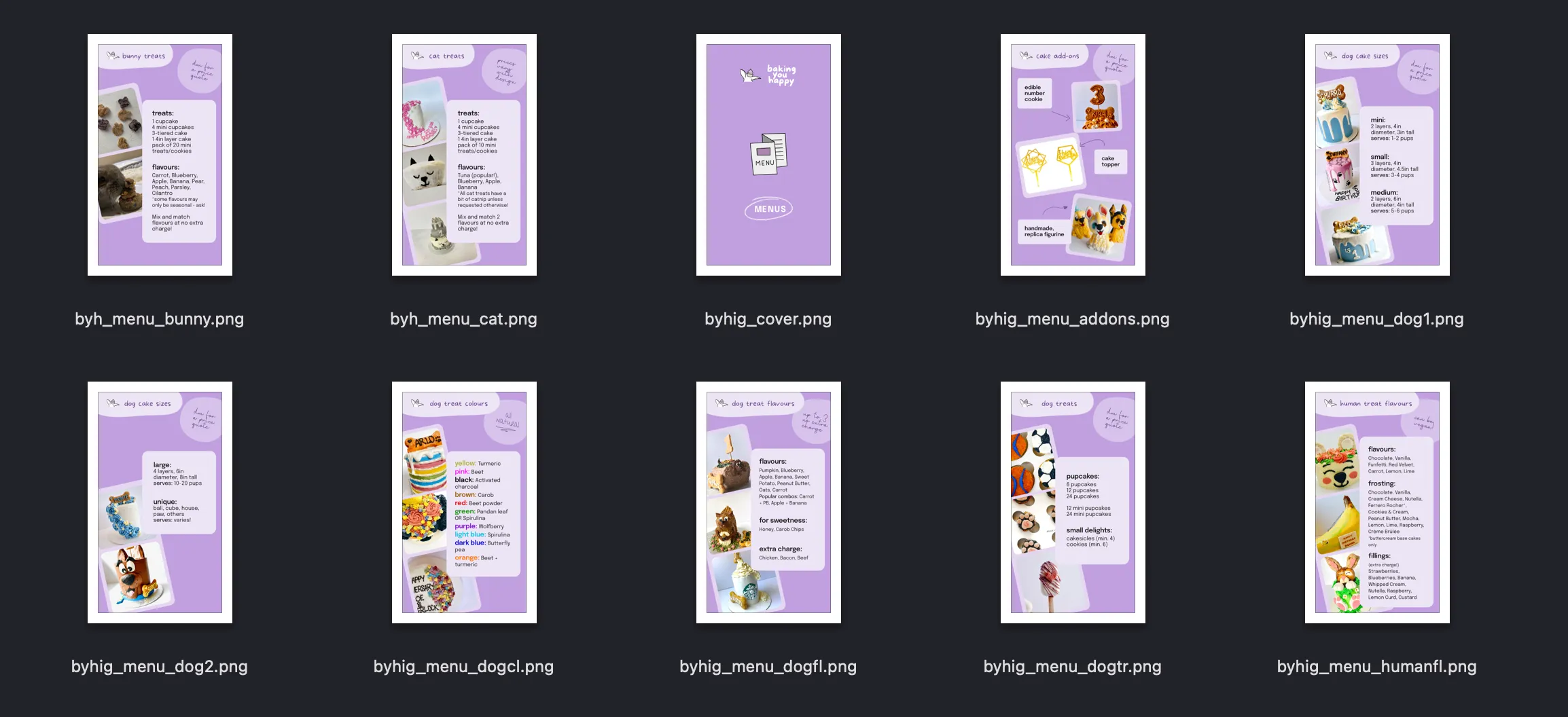
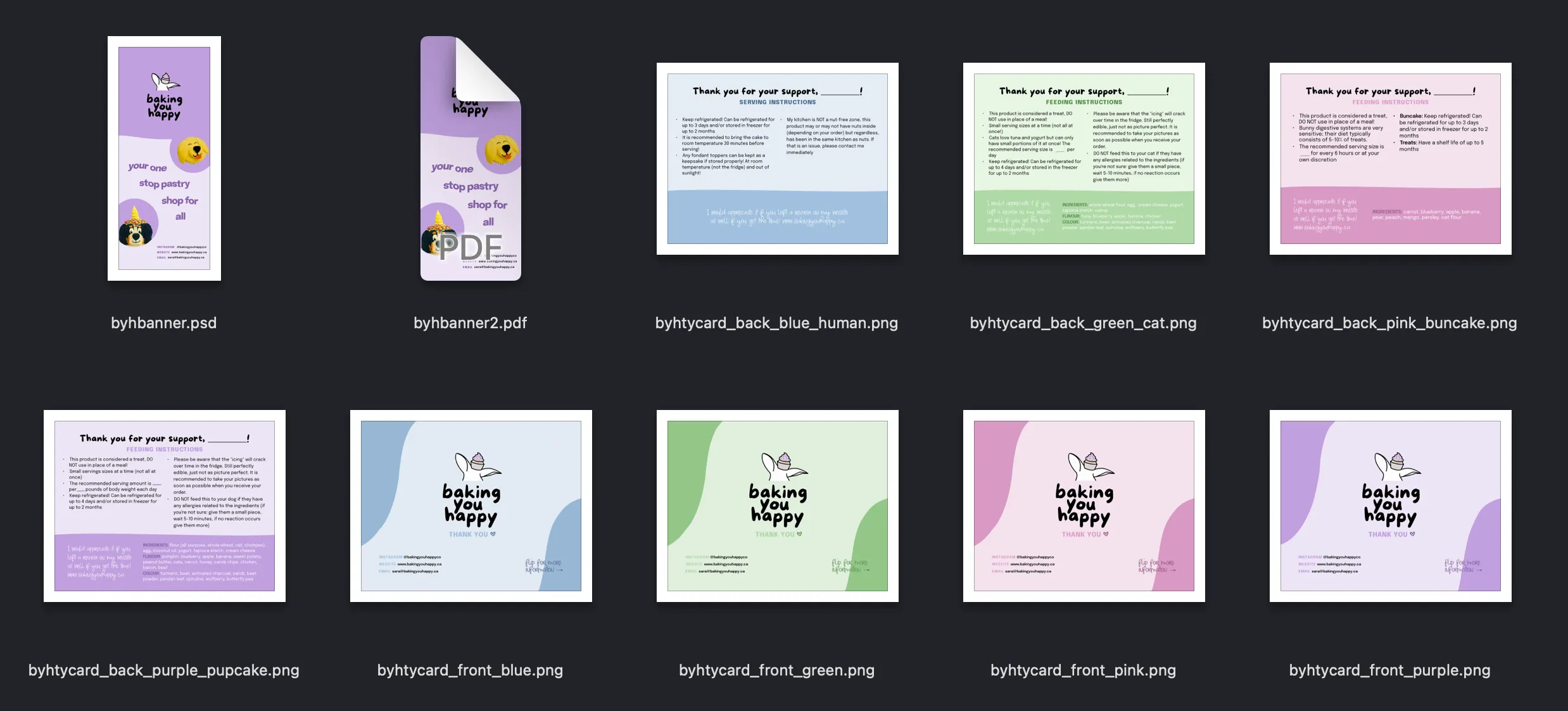
Alongside the branding, I created print materials such as business cards, order cards with feeding instructions and nutritional info, and a banner for events. Additionally, I created some social media graphics, such as custom icons for story highlights and templates for story content. I created these materials primarily on Affinity Photo and Affinity Designer, cheaper alternatives to Adobe Photoshop and Adobe Illustrator, to test out new programs when Adobe got to be a bit too expensive. While Affinity programs were virtually identical to Adobe programs, they lacked a collaborative workspace that was becoming increasingly necessary as Sara’s business grew rapidly and my own studies and work made it difficult to be solely responsible for graphic creation. As such, I transferred the designs to Canva where they could be used as templates.
Website
Once the difficult and more time-consuming brand development was complete, the process of designing and developing a website was just an exercise in applying those design elements. I started by creating a mockup using Figma to visualize the layout and share the design with my friend before going forward. The mockup ended up being far less detailed than my previous design processes, and changed quite a bit once I began to develop the website using Shopify.
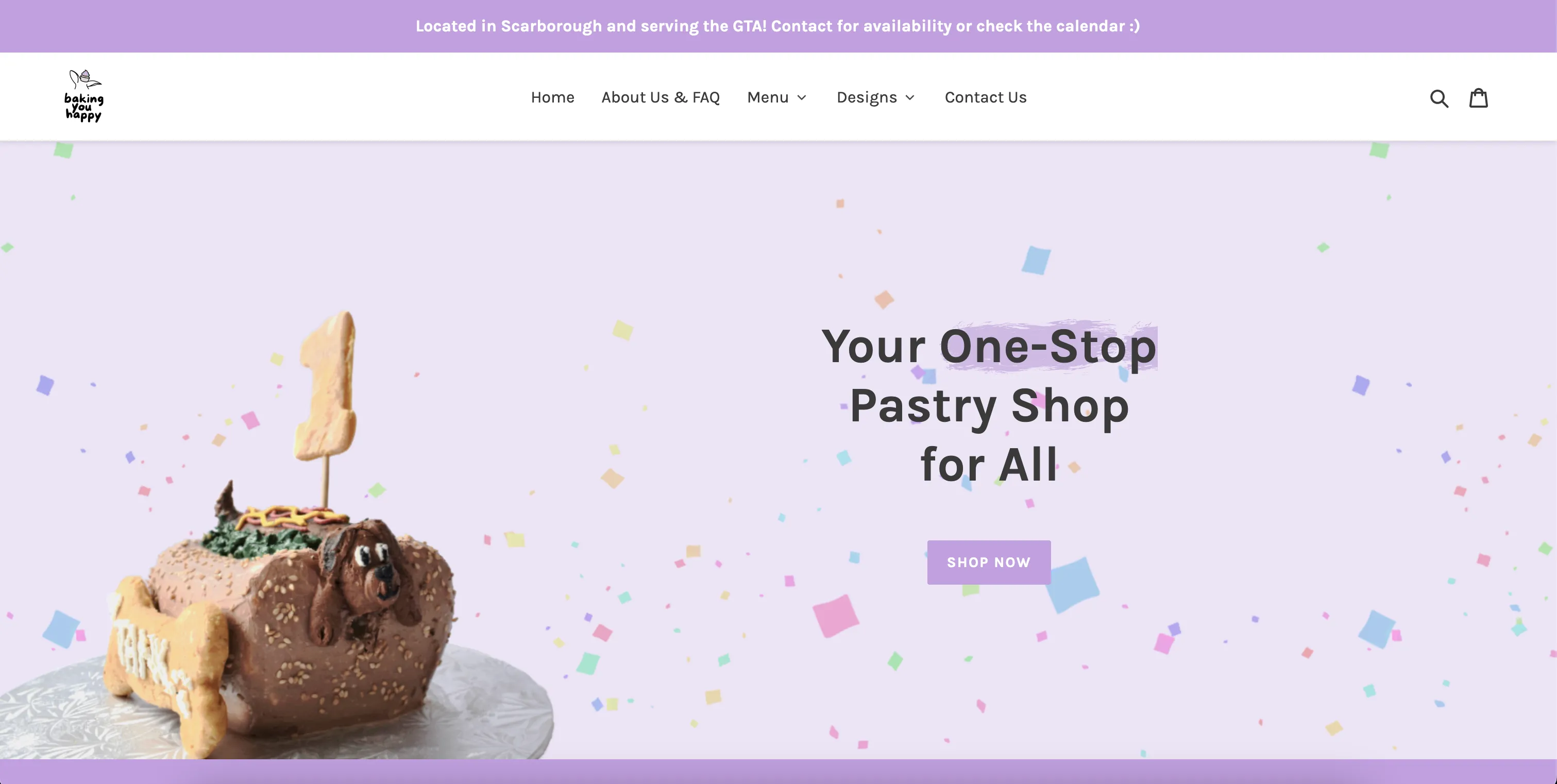
While I had some minimal experience with coding, largely just for fun, this was my first time creating such an intensive website, and definitely my first time using Shopify or e-commerce on the front end. As such, the process involved a lot of trial and error and was not as clean or organized as I would have liked it to be. However, through the experience, I gained a lot of practice in problem-solving and resilience in the face of frustration.
To this day, I still offer help with creating new designs for print and web whenever Sara needs some extra help, and assist with keeping her website up to date. This ongoing project is not a strictly professional experience, as I refuse to accept payment for it, and the working relationship is extremely casual and sporadic, but I am really proud of the work I’ve done for Baking You Happy. I gained a lot of valuable experience with learning new tools, researching transferrable industry processes, and brand-oriented communications.